
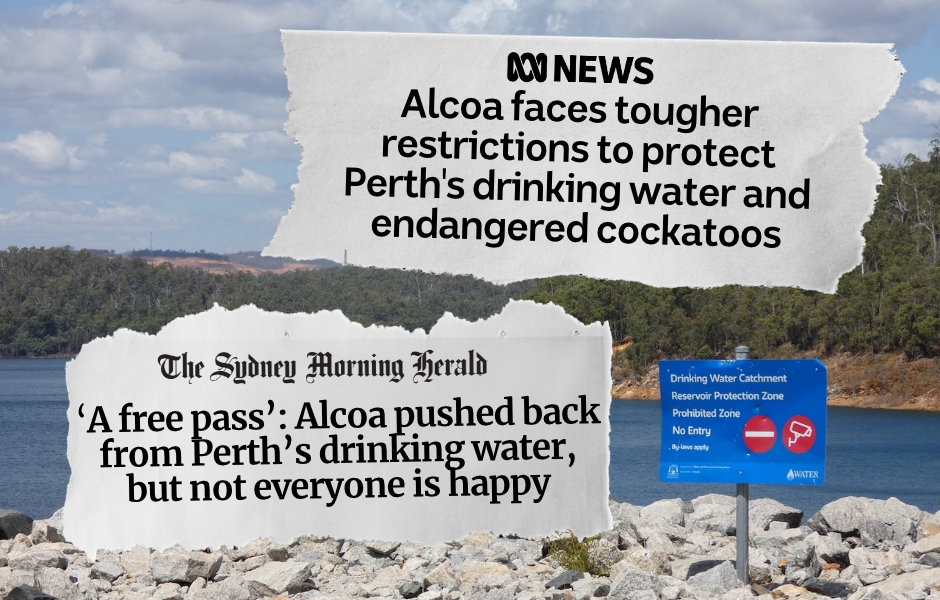
Earlier in the year the WA Environment Minister announced it would be revoking Alcoa’s exemption order and replacing it with a new one connected to its next mining program.
At the time, we called for the State Government to use this as an opportunity to protect forests and water, and to not issue Alcoa with a new exemption, which allows Alcoa to continue mining while its current operations are under assessment by the WA Environmental Protection Authority. Unfortunately, the State Government has yet again issued Alcoa with a free pass from this state’s nature laws, and granted it a new exemption, albeit with slightly strengthened conditions.
Without the tireless work of many Western Australians, these conditions would not have been strengthened at all. The End Forest Mining alliance has long called for these restrictions as the absolute minimum, but no amount of conditions can truly offset Alcoa’s clearing.
Any exemption order granted is a free pass for Alcoa to continue its destruction of the world’s only jarrah forest. It’s clear that what Western Australians really want is Alcoa out and an end to forest mining.
Let’s break down the changes made in the new order that comes into effect on December 1st.
Water
What’s changed?
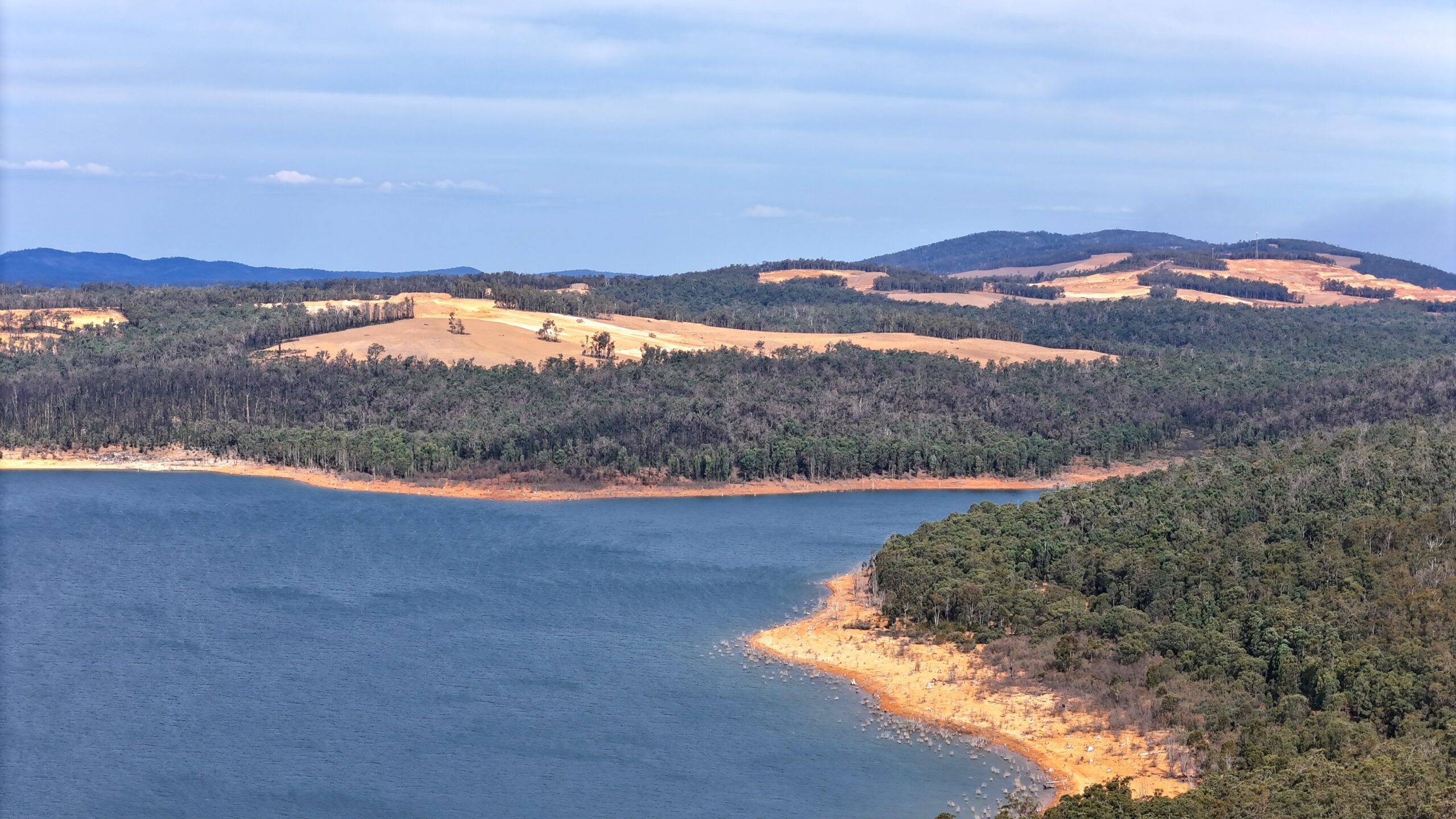
Alcoa will no longer be allowed to mine within reservoir protection zones (2km surrounding dams). This has increased from 1km surrounding dams (which has been the rule since the start of 2024.)
What still needs to change:
Additional restrictions recommended by the Water Corporation continue to be ignored, including prohibitions on mining slopes > 16% , clearing > 30% of a sub catchment, and maintaining a 2 m separation to the maximum groundwater level. These conditions must be implemented catchment wide, with no exceptions for infrastructure. Alcoa’s proposed expansion includes construction of river crossings through the reservoir protection zone over the Serpentine and South Dandalup rivers for haul and mine access roads and a conveyor.
All existing mining activities must be urgently phased out of drinking water catchments, with no further mining approved in these areas.
Black cockatoo trees
What’s changed?
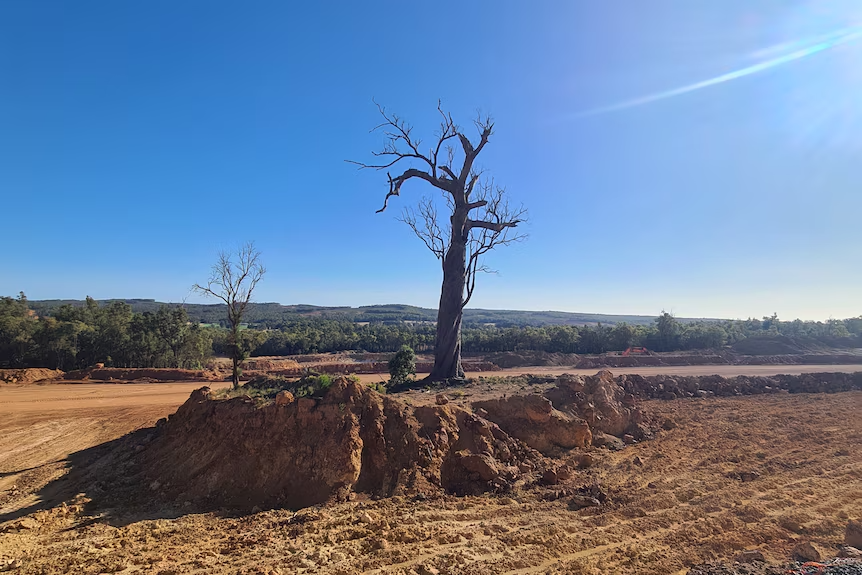
The buffer surrounding significant trees will increase to 50 metres of a black cockatoo nesting tree or a significant tree that meets specifications. Previously, this buffer was just 10 metres.
More detail has been included on how nesting trees are classified if they have 1 or more hollows or are identified by a specialist as appearing to be, or have been used by a black cockatoo. The measurement methodology for significant trees has also been specified, but the method is usually used for farm forestry. Surveys need to be completed within 2 months by independent fauna specialists to identify trees in both categories, though they don’t have to be a specialist in black cockatoos or other hollow-dependent species.
What’s the same?
To meet the criteria for significant trees, jarrah trees still need to have at least 2 m diameter, and marri trees at least 1.5 m. If Alcoa has already started mining within 50 m of a significant tree when the new exemption comes into effect, it can mine up to 10 m from the tree.
Alcoa can continue to mine up to 10 m of nesting and significant trees, of which it has already begun substantive mining within 50 m.
What still needs to change:
The Department of Biodiversity, Conservation and Attractions has previously recommended a buffer of 250 m for black cockatoo nesting trees. Arborists also recommend that no blasting should occur within 1000 m of nesting or significant trees. An additional buffer for black cockatoo night roosting sites must also be implemented, which includes all vegetation within a 500 m radius of each known night roosting tree.
Exploration drilling should be prohibited during black cockatoo breeding seasons (August through to February) as recommended by the Department of Mines, Petroleum and Exploration.
Further adequate buffers must also be implemented between mining activities and cultural sites and high conservation values, including old growth forests, Threatened Ecological Communities, and groundwater-dependent ecosystems, in consultation with independent scientists.
For all buffers, outcome-based protections must be enforced to ensure there is no adverse impact.
Clearing, exploration, and more…
What’s changed?
Unlike the old exemption order, this new exemption includes an end date of 31 December 2027.
The area in which Alcoa is allowed to complete exploration drilling will be reduced by 104,244 ha for a total exploration area of 129,246 ha. This is in line with announcements over the last year that Alcoa would withdraw exploration plans from the northern Darling Range until at least 2027.
What’s the same?
Alcoa can still clear up to 800 ha a year while under assessment from the WA Environmental Protection Authority. No other company is afforded this luxury.
The amount of exploration drilling Alcoa can complete is still 105 000 drill holes in any calendar year.
What still needs to change:
Since receiving its 2023 exemption order, Alcoa has been penalised for illegally clearing forest without federal permission for more than 15 years,, compromised conservation efforts by failing to share critical black cockatoo data, and found to have misled Australians on rehabilitation claims.
It’s time that Alcoa is treated the same as any other company under assessment by the WA Environmental Protection Authority, and is made to wait whilst its environmental impact is quantified.
This is an American company that is given free pass after free pass from WA and Australian’ environmental laws despite having proven that it cannot follow even the most basic of guidelines.
The only way to truly protect the jarrah forest from Alcoa is to end forest mining, and in doing so, create a network of protected areas that once and for all, say that this forest is too precious to mine.
Join us on December 12 at Langley Park in Perth CBD to add your voice to the call to end forest mining. You can let us know you’re coming at endforestmining.org.au/events.