Documents obtained by the WA Forest Alliance under Freedom of Information (FOI) reveal that Alcoa has attempted to shut Water Corporation inspectors out of its mine sites in order to avoid scrutiny.
The documents also reveal:
- Water Corporation cannot properly assess the dangers Alcoa poses to the state’s drinking water supply, because it is being shut out of mine sites, underfunded by Government and Alcoa is not supplying enough information;
- The Department of Jobs, Tourism, Science and Innovation (JTSI) (now known as the Department of Energy and Economic Diversification, DEED) and the Department of Water and Environmental Regulation (DWER) are not sharing all of the necessary documents with the Water Corporation;
- The critical importance of dams to the water supply is being severely underestimated by the State Government;
- Alcoa’s promise of $100m to clean up the state’s water supply in the event of contamination is wholly insufficient.
Water Corporation inspectors had been increasingly shut out of Alcoa’s mine sites
Access to catchment inspections has become limited due to an increase in mine site Health Safety and Environment requirements, while strip mining in these areas continued unabated.
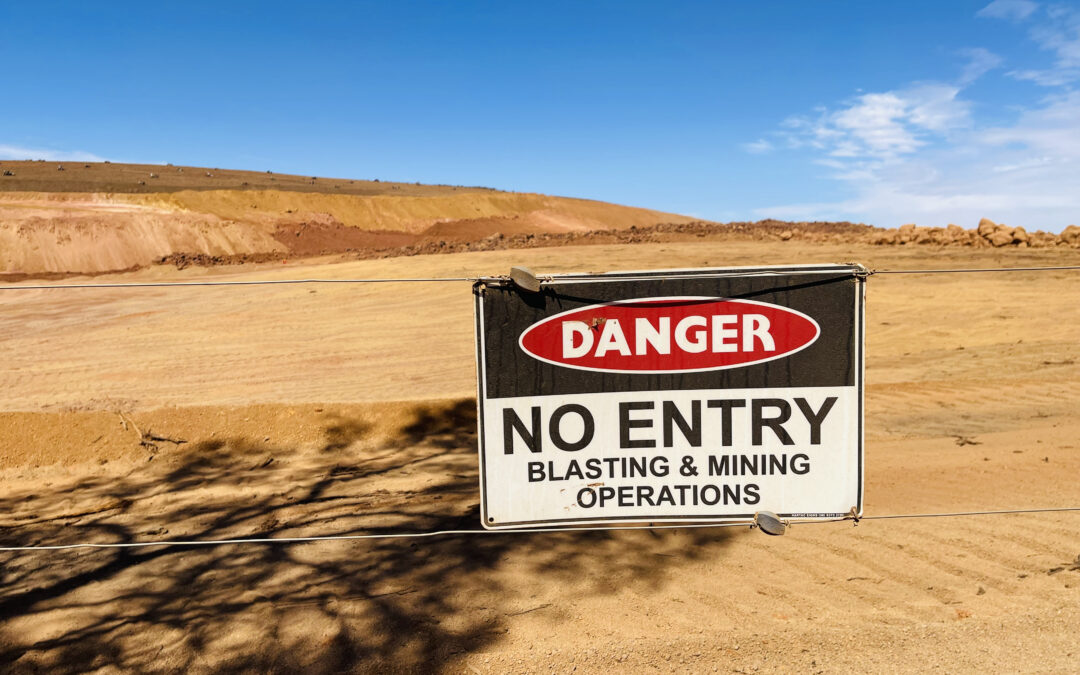
Alcoa has initiated fencing of mine sites within state forest and banned use of drones near mining activities, inhibiting Water Corporation’s ability to monitor water quality within the mining areas.
These inspections are critical to ensure safety of drinking water for hundreds of thousands of Western Australians. Internal documents revealed concerns over increased turbidity, hydrocarbon spills, and potential pathogens, which could jeopardise water supply for hundreds of thousands of West Australians.
Information provided by Alcoa to Water Corporation insufficient to assess risk
DEED (Formerly JTSI) has ceased providing the Water Corporation with Alcoa’s mining management plans (MMP) in response to Water Corporation withdrawing from the Bauxite Strategic Executive Committee. Water Corporation no longer has the information it requires to adequately plan risk mitigation surrounding Alcoa’s mining in water catchments.
DWER has declined offers for technical advice from Water Corporation, going against conditions agreed to with the Minister for Water in 2024.
Work is underway with DEED to determine the options for including Water Corporation’s advice in the Alcoa Transitional Approval Framework (ATAF), with the Department of Health advocating for the importance of Water Corporation’s advice in decision-making in regards to risks posed to water supply assets and operations.
Water Corporation’s concerns ignored
The Integrated Water Supply System (IWSS) delivers 332 billion litres of water every year to over two million people. Of that, 200,000 people rely on dams in the network for stable water supply.
As rainfall continues to decline, dams will take on a larger role as storage reservoirs for water sourced from desalination and deep groundwater, to ensure continuity of supply for consumers. Dams are cost-effective, and do not require power to operate, ensuring continuous water supply.
A key gap in the State Government’s awareness is the critical importance of dams and catchments for the operation of WA’s water supply in relation to reliability, energy consumption and cost.
$100 million guarantee insufficient
The Water Corporation estimated that the cost of treatment for all dams where both mining and exploration are intended in Alcoa’s original 2023-2027 Mining Management Program would be roughly $3.25 billion.
It would cost $1 billion to build a new desalination plant to replace Serpentine Dam entirely.
In 2025, Alcoa negotiated $100 million ‘Deed Poll’ was negotiated with the State of Western Australia to fund contingency and remediation actions by Alcoa in the event that a dam cannot be used due to impacts from the company’s mining operations.
In response, the Water Corporation stated: “The amount of the financial guarantee will not be sufficient to remediate for a major pollution incident, however serves as a reasonable disincentive for Alcoa to negatively impact the Corporation’s dams.”
Quotes attributable to the WA Forest Alliance Senior Campaigner, Jason Fowler:
“The risk Alcoa’s forest mining poses to Perth’s drinking water is simply unacceptable, and Alcoa knows it. Alcoa and the Cook Government must urgently heed the utility’s advice on managing the threat to drinking water, and ensure full access to monitor Alcoa’s activities.”
Quotes attributable to Conservation Council of WA Executive Director Matt Roberts:
“This lack of oversight is alarming given that in February 2025 the Water Corporation warned that Alcoa’s bauxite mining in the Northern Jarrah Forest posed a ‘certain’ contamination risk to Perth’s drinking water, specifically threatening the Serpentine Dam.
“At a time when we see increasing questions around Alcoa’s practices in our Northern Jarrah Forest, we are seeing mining exemptions handed to them from the state and federal governments. The loss of our forests is bad enough, but we also have our drinking water being put at risk, with limited oversight and little to no accountability. When is enough enough?’